
Al di là di un dubbitu ragionevule

.jpeg)


Language


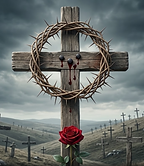


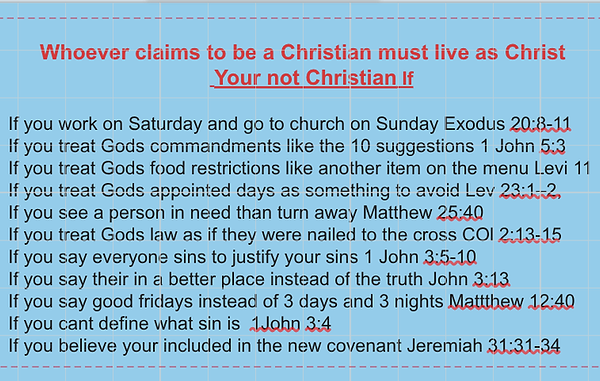
There was only one person in the entire Bible (Torah) that did everything correctly you proclaim to follow Him however you live and do the opposite. He said if you love me keep my commandments, but you don't Christ said: If you want to enter life, keep the commandments.”…Matthew 19:16
God cannot stand the prayers of anyone who disobeys his Law. Proverbs 28:9
If God's laws mean nothing to you
You mean nothing to God
But I will reply, ‘I never knew you. Get away from me, you who break God’s laws.’Matthew 7:23
“Shout with the voice of a trumpet blast. Shout aloud! Don’t be timid. Tell my people Israel of their sins! Isaiah 58:1
Yeshua is Our Advocate
…3By this we can be sure that we have come to know Him: if we keep His commandments. 4If anyone says, “I know Him,” but does not keep His commandments, he is a liar, and the truth is not in him. 5But if anyone keeps His word, the love of God has been truly perfected in him. By this we know that we are in Him:…

The Final Takeaway
Yeshua didn't leave behind a selective checklist where people get to pick and choose which laws to follow. He left a narrow path.
This test leaves absolutely no room for casual religion or intellectual debates. Yeshua didn't leave behind a philosophy to be discussed; He left a narrow path to be walked.
If the answers point to a life of compromise, it isn't a cue to just feel guilty or give up—it is a direct, urgent call to repent. It means turning away from the ways of the world, picking up the truth of the Torah that Yeshua lived out, and making the firm decision to let your hands, your mind, and your daily life reflect the Master you claim to follow.
If people claim to belong to Him but they refuse to live as He lived, keep what He kept, and honor the Torah the way He did, they are practicing lawlessness. True faith is not found in the empty rituals of those who rewrite His words—it is found in literal, active obedience to the Master.
According to the New Testament, merely claiming to a Christian and follow the Messiah is not the same as actually following Him.
Yeshua said:
"And why call ye me, Lord, Lord, and do not the things which I say?" (Luke 6:46)
And:
"If ye love me, keep my commandments." (John 14:15)
The apostle John wrote:
"And hereby we do know that we know him, if we keep his commandments. He that saith, I know him, and keepeth not his commandments, is a liar, and the truth is not in him." (1 John 2:3–4)
From this perspective, a person who continually refuses to follow the Messiah's teachings while professing faith creates a contradiction between their profession and their actions.
However, many Christians would distinguish between:
A believer who struggles with sin but desires to obey God and repents when they fail.
A person who knowingly rejects God's commands and has no intention of obeying them.
The New Testament repeatedly calls believers to repentance, faith, and obedience, while also recognizing that believers are not sinless and may stumble (1 John 1:8–9).
So, if someone completely refuses to follow the Messiah and His commandments, many would argue that Scripture calls into question whether that person's profession of faith is genuine. Passages such as Matthew 7:21–23, Luke 6:46, and 1 John 2:3–4 are often cited in that discussion.
The core biblical test is not what a person calls themselves, but whether their life shows faith expressed through obedience to God.
Our Lord again reminds us that the manifestation of our love for Him will be in our obedience to His commands. Keeping Christ's commandments is and always has been the best test of our love for Yeshua


Children of God
-
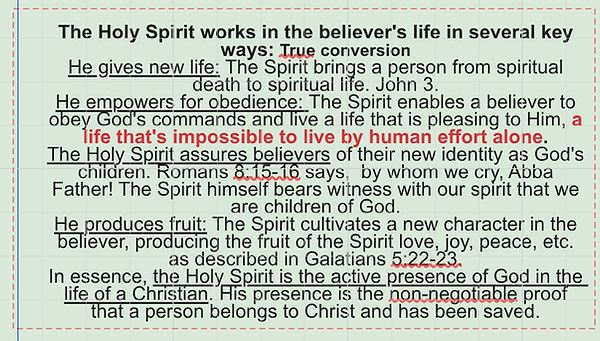
Peter replied, “Repent and be baptized, every one of you, in the name of Jesus Christ for the forgiveness of your sins. And you will receive the gift of the Holy Spirit.”
-
-
And I will put my Spirit in you and move you to follow my decrees and be careful to keep my laws.Ezekiel 36:27
-
-
This is how we know that we live in him and he in us: He has given us of his Spirit.
1 John 4:1 -
-
And For those who are led by the Spirit of God are the children of God.
1 See what kind of love the Father has given to us, that we should be called children of God; and so we are. The reason why the world does not know us is that it did not know him. 2 Beloved, we are God’s children now, and what we will be has not yet appeared; but we know that when he appears we shall be like him, because we shall see him as he is. 3 And everyone who thus hopes in him purifies himself as he is pure.
4 Everyone who makes a practice of sinning also practices lawlessness; sin is lawlessness. 5 You know that he appeared in order to take away sins, and in him, there is no sin. 6 No one who abides in him keeps on sinning; no one who keeps on sinning has either seen him or known him. 7 Little children, let no one deceive you. Whoever practices righteousness is righteous, as he is righteous. 8 Whoever makes a practice of sinning is of the devil, for the devil has been sinning from the beginning. The reason the Son of God appeared was to destroy the works of the devil. 9 No one born of God makes a practice of sinning, for God’s seed abides in him; and he cannot keep on sinning, because he has been born of God. 10 By this it is evident who are the children of God, and who are the children of the devil: whoever does not practice righteousness is not of God, nor is the one who does not love his brother.
brother.
My old self has been crucified with Christ. It is no longer me who lives, but Christ lives in me. So I live in this earthly body by trusting in the Son of God, who loved me and gave himself for me. Galatians 2:20
-
God's seal is not a physical mark
-
The forehead represents the mind of those who make a conscious decision to obey God's requirements to receive His seal will protect us from the last seven plagues.
-
We are sealed by the Holy Spirit. Is a characteristic of people who have surrendered their lives to God
-
God's seal is in His laws. Bind up the testimonies and seal the law among my disciples.
-
God's sign is His seal, the words sing and seal are interchangeable in the bible.
-
The Sabbath is God's sign, The Sabbath is the seventh day of the week. The fourth commandment is to remember the Sabbath. There is not one scripture in the entire Bible changing the Sabbath to Sunday. Its a sign of God's authority He chose the day.
-
There are three elements to a legal seal,
The seal giver
His title
His territory
The Great Commission
The Great Commission is Jesus's final instruction to his disciples before his ascension, found in Matthew 28:19-20. The passage says, "Therefore go and make disciples of all nations, baptizing them in the name of the Father and of the Son and of the Holy Spirit, and teaching them to obey everything I have commanded you. And surely I am with you always, to the very end of the age." This is not just a suggestion, but a command for all who follow Him.
Why It Is Considered a Sin
-
A Command, Not a Suggestion: The Bible frames this as a clear directive. A sin is defined as "missing the mark" or an act of disobedience against God's will. Willfully ignoring a direct command from Jesus is therefore considered a sinful act.
-
The Nature of a Disciple: In Christian belief, a true disciple isn't just a follower, but a learner and a reproducer. The biblical understanding is that a disciple of Jesus should naturally want to share their faith and help others become disciples, just as they were discipled. A Christian who has no desire to make disciples may be demonstrating a lack of genuine conversion or a spiritual selfishness that is contrary to the self-sacrificial nature of Christ.
-
Sins of Omission: The Bible teaches that sin isn't only about doing something wrong (sins of commission) but also about failing to do something you know you should do (sins of omission). Not making disciples falls squarely into this category. It's an act of neglecting a divinely ordained responsibility.
-
While a Christian's salvation isn't based on their ability to make disciples, their obedience to this command is seen as evidence of their faith and love for God and others. For many, a failure to engage in this work points to a deeper spiritual issue, such as fear, a lack of trust in God's power, or a love for oneself more than for others.
-
There is now one single law that rules both Jew and Greek alike:
The law of faith (Romans 3:27)
The law of the Spirit of life in Christ Jesus (Romans 8:2)
The law of Christ = love God and love your neighbor, fulfilled by the Spirit (Galatians 5:14; 6:2; Romans 13:8–10)
One God.
One Messiah.
One gospel.
One law for Jews and Greeks: faith in the crucified and risen Jesus.
That is why Paul can say in the very next breath after “neither Jew nor Greek”:
“You are all one in Christ Jesus. And if you are Christ’s, then you are Abraham’s offspring, heirs according to the promise” (Galatians 3:28–29).
Same promise. Same inheritance. Same law. No exceptions. No special tracks.